


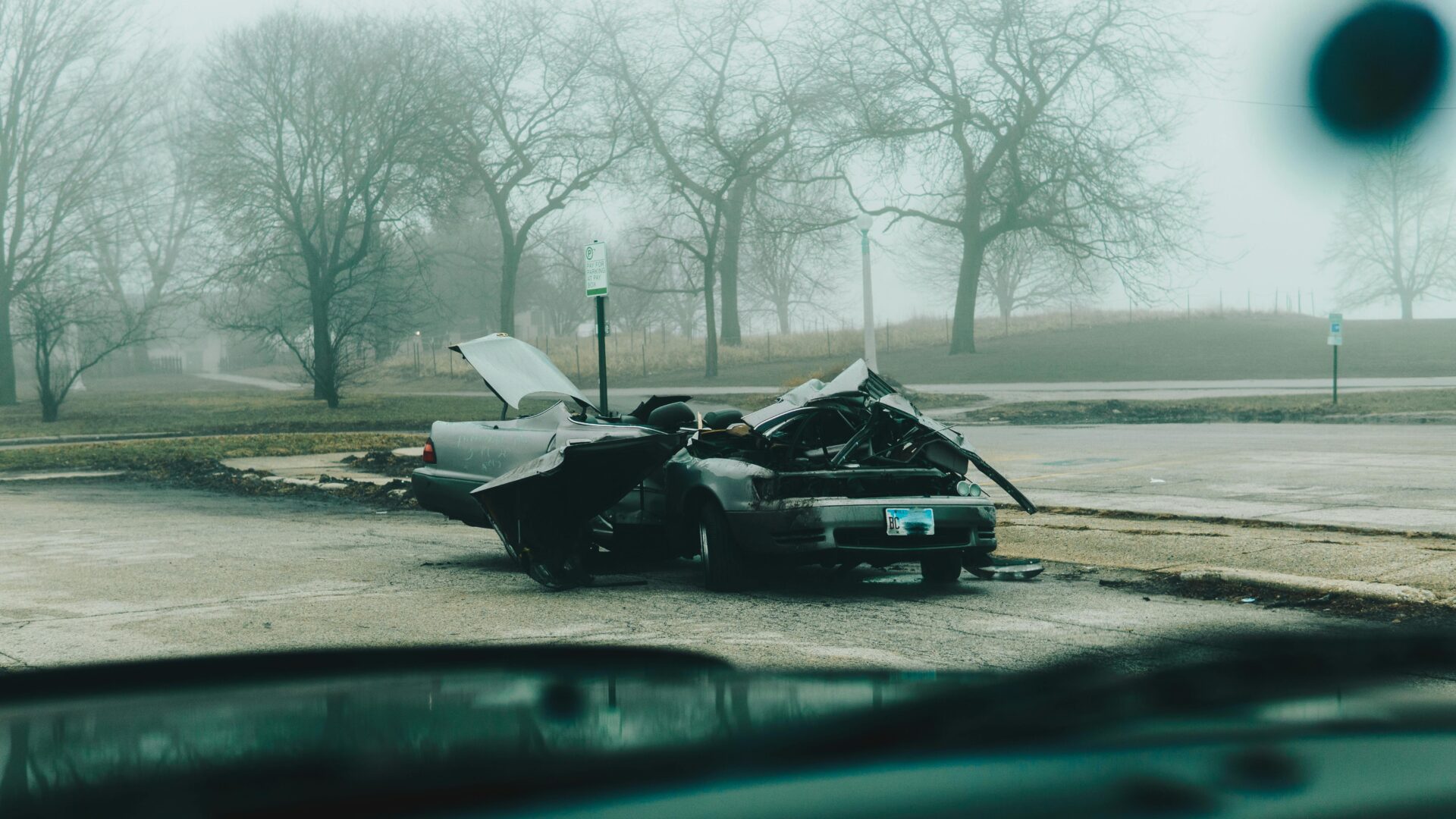
The minutes after a crash are the worst time to think clearly and the most important time to collect information. Memory degrades fast, drivers leave, and the police report, when it comes, may be incomplete or wrong. Here is exactly what to exchange at the scene of a Florida car accident, what the law requires, and what to keep to yourself.
What Florida law requires you to exchange
Florida law requires every driver involved in a crash with injury or property damage to stop, remain at the scene, give your name, address and vehicle registration number, and show your driver’s license on request, both to the other driver and to any officer. Leaving the scene of a crash with injuries is a felony. Rendering reasonable aid, including calling 911, is also required. Beyond those legal minimums, the following is what protects your claim.
The must-have checklist
Use your phone’s camera rather than a pen. Photographs do not have typos.
- Driver’s license. Photograph the front. Confirm the photo matches the person who was driving. The driver and the owner are often different people.
- Insurance card. Company name, policy number and the effective dates. An expired card is a red flag that you may be dealing with an uninsured driver, which makes your own uninsured-motorist coverage central.
- License plate. The rear plate, in a photo that also shows the make, model and color. If the driver leaves, this is your case.
- Vehicle registration. This shows who owns the car. Under Florida’s dangerous instrumentality doctrine the owner may be liable even if someone else was driving.
- Phone number and email for the other driver, and for any passengers in their car.
- Witnesses. Names and phone numbers of anyone who stopped. Independent witnesses are the most persuasive evidence in a disputed-fault case, and they are gone in five minutes.
- The officer’s name and agency, and the crash report number if one is given at the scene.
- Commercial vehicles. If a truck, delivery van or rideshare is involved, photograph the company name, USDOT number and any unit number on the vehicle, and ask the driver whether they were on the clock or on an app.
Photograph the scene itself
Before the cars are moved, if it is safe: the position of the vehicles, the damage to each, skid marks, debris, traffic signals and signs, the weather and lighting, and your own visible injuries. Take wide shots that show the intersection and close shots that show the damage. Video a slow walk around both cars.
What not to say
Be polite and brief. The other driver and their passengers are potential witnesses against you.
- Do not discuss who was at fault. “I didn’t see you” and “I’m so sorry” are quoted back as admissions.
- Do not describe your injuries, or say that you are fine. You do not know yet.
- Do not agree to “handle it without insurance.” Injuries appear later, and verbal deals evaporate.
- Do not post about the crash on social media.
If the other driver refuses
Do not argue or follow them. Note the plate, the vehicle and the direction they left, and tell the officer. If they drive off, it is a hit-and-run, and your uninsured-motorist coverage may apply even without contact information.
Reporting the crash
Call 911 for any crash with injuries. Florida requires a report to law enforcement for crashes involving injury, death or significant property damage, and the written report that follows is what insurers rely on. Florida recently changed its crash reporting rules; see our summary of the new crash reporting law. Ask the officer how to obtain the report, and request it as soon as it is available.
What happens with the information afterward
Give your lawyer everything. We use the insurance information to open claims with every policy that may apply, the registration to identify the owner, the witness list to lock in statements before memories fade, and the photographs to reconstruct fault. If you have questions about whose insurance pays, our coverage tool walks through the common scenarios.
One more thing to collect: medical care
See a doctor within 14 days. Florida’s PIP law requires it for your own no-fault benefits, and an early record ties your injuries to the crash. Call The Injury Advocates at (754) 812-8444 or 833-DARFOOR, or send us a message. The consultation is free, and you owe no fees or costs unless we recover for you. Learn more about how our car accident lawyers build claims from the scene forward.
Kweku Darfoor is the founder of The Injury Advocates (Darfoor Law Firm, P.A.), a member of The Florida Bar since 2014, and a Plantation-based personal injury attorney representing seriously injured people and their families across Fort Lauderdale, Broward County, and South Florida. This content is for general information and is not legal advice.