Call Now

Police Shooting & Excessive Force Lawyer

Police Shooting & Excessive Force Lawyer

Holding Police Accountable When Force Goes Too Far

Police officers are trusted to protect the public. When an officer uses unjustified or excessive force, the consequences can be devastating: permanent injuries, lost livelihoods, and families who lose a loved one. These cases are also among the hardest to win, because government agencies, their insurers, and their lawyers fight hard to protect officers and departments.

The Injury Advocates represents people across Florida who have been shot, beaten, tased, or otherwise injured by law enforcement, and families whose loved ones were killed. Our founder, Kweku Darfoor, is personally involved in every police misconduct case we take on.

Our Work for the Family of Corey Jones

In October 2015, Corey Jones, a 31-year-old musician, was waiting for roadside assistance beside his broken-down car on an Interstate 95 off-ramp in Palm Beach Gardens when a plainclothes officer in an unmarked van approached him and fatally shot him. The officer was later convicted of manslaughter and attempted murder and sentenced to 25 years in prison.

The Injury Advocates represented the Jones family in their civil case against the City of Palm Beach Gardens and the former officer. In 2023, the City agreed to a $2 million settlement with the family.

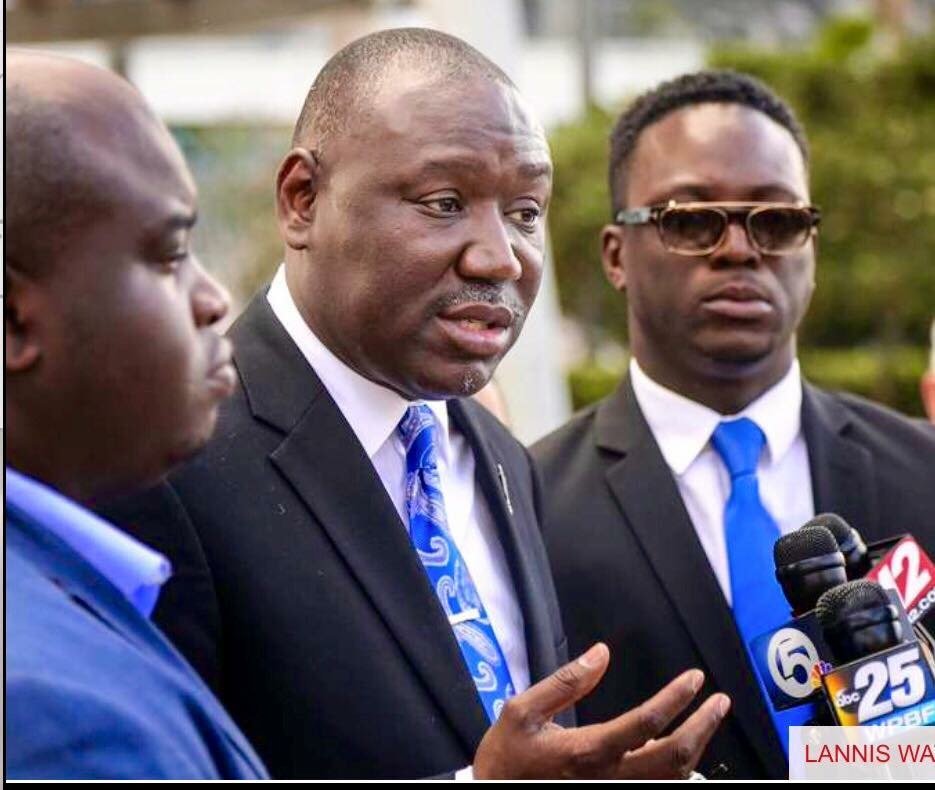
Attorney Kweku Darfoor with attorneys Benjamin Crump and Skinner Louis speaking to reporters about the Corey Jones case
Kweku Darfoor with attorneys Benjamin Crump and Skinner Louis speaking to reporters about the Corey Jones case.

In the news

See full media coverage of the Corey Jones case

Every case is different. Past results do not guarantee a future outcome.

Police Misconduct Cases We Handle

  • Police shootings, including fatal shootings
  • Excessive force during arrests, traffic stops, and protests
  • Taser, K-9, and baton injuries
  • Injuries and deaths caused by chokeholds or dangerous restraint
  • Injuries and deaths in jails and police custody
  • Wrongful death claims for families who have lost a loved one

How Police Misconduct Claims Work in Florida

Claims against law enforcement are different from ordinary injury cases. Depending on the facts, a case may involve:

  • Federal civil rights claims under 42 U.S.C. § 1983, which allow people to sue officers who violate their constitutional rights, including the Fourth Amendment right to be free from excessive force.
  • Claims against the city, county, or sheriff’s office when a department’s policies, training, or customs led to the violation.
  • Florida state-law claims, such as battery or wrongful death, which are subject to sovereign immunity rules, damages limits, and pre-suit notice requirements.

Officers and agencies frequently raise defenses such as qualified immunity, which can end a case early if it is not carefully built from the start. Knowing which claims to bring, against whom, and in which court is critical.

Act Quickly to Protect Your Case

Critical evidence in police cases can be lost, overwritten, or withheld. As soon as possible, we work to preserve body-worn and dash camera footage, 911 and dispatch recordings, use-of-force reports, internal affairs records, nearby surveillance video, and witness statements.

Claims against government agencies also carry strict notice requirements and filing deadlines, and some can be as short as two years. If you or a family member has been hurt by police, speak with a lawyer before giving any statement to investigators or an insurance representative.

We Take On Powerful Institutions

Police misconduct cases often pit one family against a government agency with unlimited resources. We bring in experienced investigators and use-of-force experts, handle the media attention that can come with a high-profile case, and fight for accountability as well as compensation. If needed, we are ready to take your case to trial.

Why Families Choose The Injury Advocates

  • Proven in high-profile cases. We represented the family of Corey Jones in one of Florida’s most closely watched police shooting cases.
  • Experience under the spotlight. The Corey Jones case drew national coverage from The New York Times, USA Today, TIME, CBS News, Fox News, Yahoo News, the Sun Sentinel, and The Palm Beach Post. We know how to protect a family when the cameras are on.
  • Direct attorney involvement. Kweku Darfoor is personally involved in your case from start to finish.
  • No fees or costs unless we win. You pay nothing up front.

Frequently Asked Questions

Can I sue the police for excessive force in Florida?

Yes. If an officer used force that was not objectively reasonable under the circumstances, you may be able to bring a federal civil rights claim under 42 U.S.C. § 1983, Florida state-law claims, or both. Whether you can recover, and from whom, depends on the facts, the agency involved, and the defenses raised.

How much does it cost to hire The Injury Advocates?

Nothing up front. Your consultation is free, and we handle injury cases on a contingency fee basis, which means our fee is a percentage of the money we recover for you. If we do not win your case, you owe no attorney’s fees and no case costs.

What is qualified immunity?

Qualified immunity is a legal defense that can protect individual officers from personal liability in federal civil rights cases unless they violated a clearly established constitutional right. It is one of the biggest obstacles in police cases, which is why these claims need to be carefully investigated and built from the start.

Can my family file a claim if a loved one was killed by police?

Yes. Under Florida’s Wrongful Death Act, the personal representative of the estate can bring a claim on behalf of the surviving family members, and federal civil rights claims may also be available. These cases have strict deadlines, so families should speak with a lawyer as soon as possible.

What if I was arrested or charged with a crime?

You may still have a claim, but what happens in your criminal case can affect your civil case. We can coordinate with your criminal defense attorney so that nothing you say or do in one case harms the other.

How long do I have to file a police misconduct claim?

It depends on the type of claim and the agency involved. Florida wrongful death claims generally must be filed within two years, and claims against government agencies require written notice before a lawsuit can be filed. Because evidence can disappear quickly, contact a lawyer as soon as possible.

Follow us @darfoorlaw