


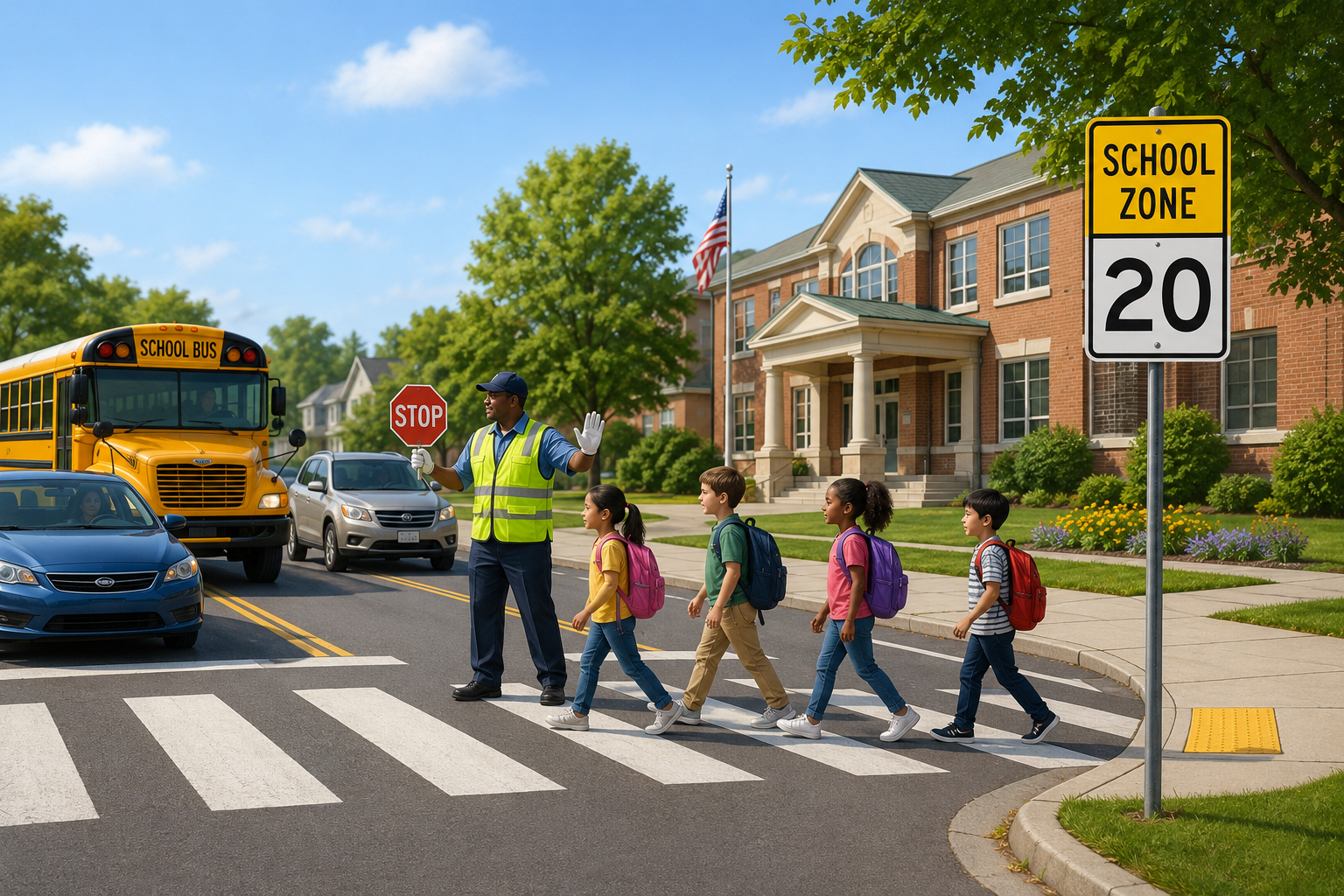
If you’ve driven near an elementary or middle school during the first few weeks of the school year, you already know: drop-off and pick-up lines can feel like organized chaos. Between rushed parents, kids darting across the street, and buses, bikes, and cars all converging on the same few blocks, school zones become one of the riskier stretches of pavement in any neighborhood — especially in September, when routines are still new.
The Injury Advocates wants families in Florida to understand the risks in and around school zones this year, and what to do if a child is hurt.
Why School Zones Are So Dangerous
Several factors combine to make the streets around schools particularly hazardous during arrival and dismissal:
Traffic volume spikes in a short window. Dozens or hundreds of vehicles converge on the same streets within a 15–20 minute period, twice a day.
Distracted and rushed drivers. Parents running late, checking phones, or trying to squeeze into a crowded drop-off lane are more likely to roll through stop signs, block crosswalks, or fail to see a child stepping off the curb.
Kids are unpredictable. Children — especially younger ones — often don’t judge vehicle speed and distance well, and may dart between parked cars or run to catch up with friends without checking for traffic.
New routines mean new risks. At the start of the school year, families, drivers, and even crossing guards are re-learning routes, timing, and traffic patterns, which increases the chance of a mistake.
Common Types of School Zone Accidents
- Crosswalk collisions, where a vehicle fails to stop or yield to a child crossing in a marked or unmarked crosswalk
- Driveway and parking lot accidents, often involving a vehicle backing up without seeing a child behind it
- Failure to obey crossing guards or school zone speed limits, particularly by drivers unfamiliar with the area
- Bicycle and scooter accidents, as more kids ride to school and share the road with cars
- Rear-end and side-impact collisions in congested drop-off lines, which can injure children still inside a vehicle
Who May Be Responsible
Depending on the circumstances, liability for a school zone accident may fall on:
- A negligent or distracted driver who violated traffic laws or school zone speed limits
- A school district, if inadequate staffing, poor traffic control, or unsafe drop-off/pick-up design contributed to the crash
- A local government, if faulty signage, missing crosswalks, or poor visibility played a role
- A vehicle owner, in cases involving negligent entrustment
Because school zone crashes often involve multiple potentially responsible parties — and sometimes a government entity — an early legal consultation can help clarify who may be liable and what deadlines apply.
Practical Safety Tips This School Year
- Slow down and stay alert in posted school zones, even before or after official school hours — kids often arrive early or leave late for practices and clubs.
- Never block a crosswalk, even briefly, while waiting in a drop-off line.
- Put the phone away during drop-off and pick-up — a few minutes of full attention can prevent a lifetime of regret.
- Walk kids across busy streets when possible, rather than dropping them at a distance and expecting them to cross alone.
- Teach children to make eye contact with drivers before crossing, and to never assume a stopped car has seen them.
If Your Child Has Been Injured
A school zone accident can happen in seconds but leave lasting physical, emotional, and financial consequences. If your child has been injured near school this year, prompt medical care, careful documentation (photos, witness names, any available video), and an early conversation with an attorney can help protect their right to compensation for medical bills, pain and suffering, and future care.
The Injury Advocates represents injured children and families throughout Florida. Call us today at 754-812-8444 for a free consultation — there’s no cost or obligation to learn where you stand.
This blog post is for informational purposes only and does not constitute legal advice. Please consult a qualified attorney regarding your specific circumstances.
Related: Learn more about our pedestrian and bicycle accident practice.
Kweku Darfoor is the founder of The Injury Advocates (Darfoor Law Firm, P.A.), a member of The Florida Bar since 2014, and a Plantation-based personal injury attorney representing seriously injured people and their families across Fort Lauderdale, Broward County, and South Florida. This content is for general information and is not legal advice.