


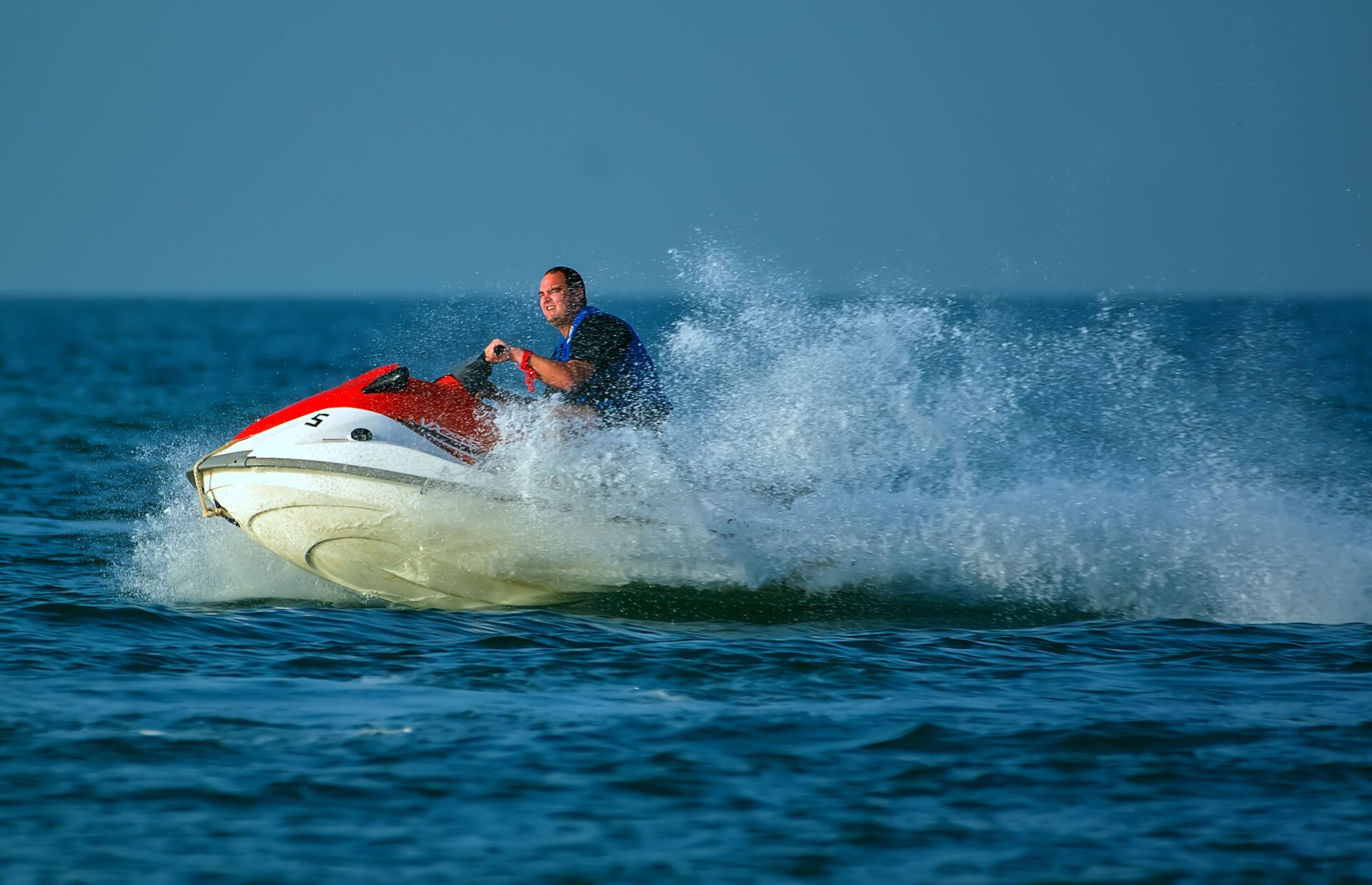
Jet skis and other personal watercraft are a summer staple on Florida’s waterways, but they’re also involved in a disproportionate number of boating accidents given how many are on the water compared to larger vessels. Their speed, maneuverability, and popularity among inexperienced riders make them a recurring source of serious injuries every year.
Florida requires anyone born on or after January 1, 1988 to complete a boater education course before operating a personal watercraft. There are also minimum age requirements and rules about renting to minors. When a rental company skips these requirements, whether by renting to someone underage or without proper instruction, that can become a factor in liability if an accident happens.
Common causes of personal watercraft accidents include operators going too fast in crowded areas, reckless maneuvers like sharp turns close to other watercraft or swimmers, collisions between multiple personal watercraft, and riders unfamiliar with how quickly these machines can move and how little control they offer at high speed.
Rental situations add another layer. If you were injured while riding a rented jet ski, or if another rented jet ski collided with you, the rental company’s responsibilities come into play. Companies are expected to properly maintain their equipment, verify riders meet legal requirements, and provide basic safety instruction. A rental company that cuts corners on any of these can share responsibility for an accident.
Personal watercraft injuries tend to be more severe than people expect, since these vehicles have no seatbelts, no airbags, and no protective structure around the rider. Collisions, even at moderate speeds, can cause serious injuries.
If you were hurt in a personal watercraft accident, whether you were riding one, on another boat nearby, or swimming in the area, it’s worth having the details of what happened reviewed. Rental agreements sometimes include waiver language that companies rely on to avoid responsibility, but these waivers don’t always hold up, especially if negligence played a role.
Getting medical care right away and documenting the scene, including who was operating the watercraft and any rental paperwork, puts you in a much better position if you decide to pursue a claim.
Learn more about how our Fort Lauderdale personal injury lawyers handle serious injury cases.
Related: Learn more about our boating accident practice.
Kweku Darfoor is the founder of The Injury Advocates (Darfoor Law Firm, P.A.), a member of The Florida Bar since 2014, and a Plantation-based personal injury attorney representing seriously injured people and their families across Fort Lauderdale, Broward County, and South Florida. This content is for general information and is not legal advice.